
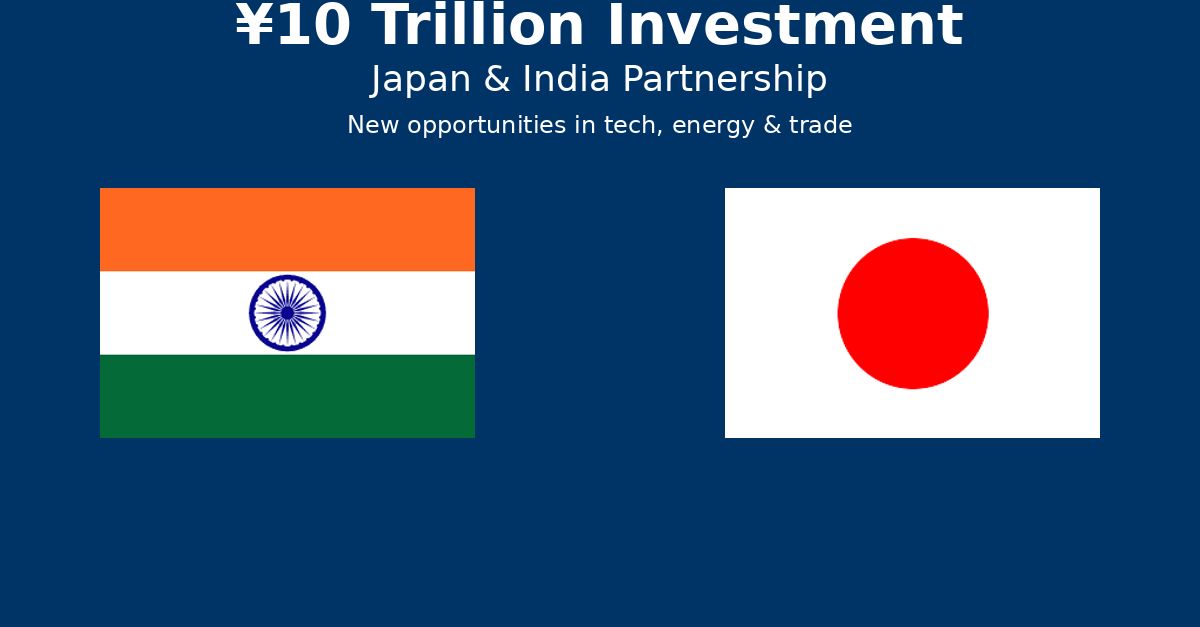
In early August 2025, the regional heads of a Japanese electronics conglomerate gathered in Tokyo to discuss global expansion. As they pored over markets and tariffs, a news alert flashed across the screen: Japan will commit ¥10 trillion (≈ US$68 billion) to India over the next decade, to be announced when Prime Minister Narendra Modi arrives on 29 August. This figure doubles Tokyo’s previous investment target and focuses on semiconductors, critical minerals, telecoms, clean energy, pharmaceuticals and AI. The executives realized the announcement wasn’t just a political signal—it reshaped their supply-chain strategies and opened new avenues for cross-border collaboration.
Why it matters for business leaders
Scale and sectors – The ¥10 trillion plan spans a decade and prioritises semiconductor fabrication, rare‑earth processing, telecoms infrastructure, clean energy, pharma and artificial intelligence. These sectors align directly with India’s industrialisation programmes and Japan’s push for economic security, creating new vendor slots for both Indian and Japanese firms.
Talent and knowledge transfer – Japan will seek more Indian engineers and researchers to support its high‑tech sectors, aiming to double Indian specialists working in Japan from 25 000 to 50 000 over five years. For Indian companies, this means easier access to Japanese know‑how and customers; for Japanese companies, it offsets labour shortages while tapping India’s tech talent.
Economic security framework – A joint Economic Security Initiative will ensure stable supplies of critical materials and enhance resilience in core infrastructure. By coupling investment with supply‑chain governance, both governments want to reduce over‑reliance on single-country sources and encourage diversification.
Opportunities for Indian companies
Semiconductor supply chain – With Japan’s new fab capacity scaling up and government subsidies flowing, Indian foundries, equipment suppliers and design houses can supply wafers, substrates and chip design services. The memorandum of cooperation on semiconductors signed in 2023 already opened doors to joint research projects.
Clean energy & critical minerals – Japan’s focus on clean energy and rare‑earth security means it will invest in Indian renewable projects and mineral extraction. Indian renewable developers can gain Japanese capital and technology, while critical‑minerals miners will find assured offtake agreements.
Pharma & AI partnerships – Japan’s ageing population drives demand for affordable medicines. India’s cost‑competitive generics and biosimilars can find a bigger market, provided they meet Japanese regulatory standards. AI collaborations under the new AI Cooperation Initiative could also spur joint product development and startup funding.
Opportunities for Japanese companies
Manufacturing in India – Tariff hikes in other markets make India a strategic manufacturing base. Japanese OEMs in autos and electronics can expand their Indian footprints to serve both local and global demand.
Investment in Indian startups – The investment plan will channel Japanese capital into Indian tech startups, especially in mobility, digital health and clean‑tech.
Access to India’s talent pool – By partnering with Indian universities and training centres, Japanese firms can source skilled engineers without fully relocating operations.
How MokuSetu Group can help
Companies keen to participate in this surge need not set up a local entity immediately. MokuSetu Group provides on‑the‑ground support in Japan and India—market-entry strategy, partner sourcing, quality inspections and regulatory guidance—allowing businesses to validate demand and establish relationships before committing capital. Whether you are an Indian manufacturer exploring Japanese clients or a Japanese firm seeking Indian suppliers, our cross-border expertise helps you navigate language, regulatory and cultural barriers.
Risks to consider
Long sales cycles and regulatory complexity – Japanese procurement decisions often take months, and compliance standards are rigorous. Prepare bilingual documentation and invest in quality certifications early.
Currency and policy volatility – Yen and rupee fluctuations can affect margins, and future policy changes may tweak sectoral priorities. Use hedging strategies and flexible pricing models.
Integration challenges – Cultural differences and management styles can hinder joint ventures. Cross-cultural training and local execution partners are essential to bridge gaps.
Conclusion
Japan’s planned ¥10 trillion investment in India during PM Modi’s August 2025 visit represents far more than a diplomatic gesture—it is a strategic blueprint for supply‑chain resilience, high‑tech collaboration and shared prosperity. Savvy CEOs and entrepreneurs will see opportunities in semiconductors, clean energy, critical minerals and AI, and prepare to partner across borders without rushing into costly incorporations. With the right preparation and a trusted local partner, can your business turn this historic investment wave into a launchpad for long‑term growth?